Payout Rate Dynamics and Their Timing with Challenge Milestones on Authorized Gaming Networks
Written by Drew Klein · Oct 15, 2026
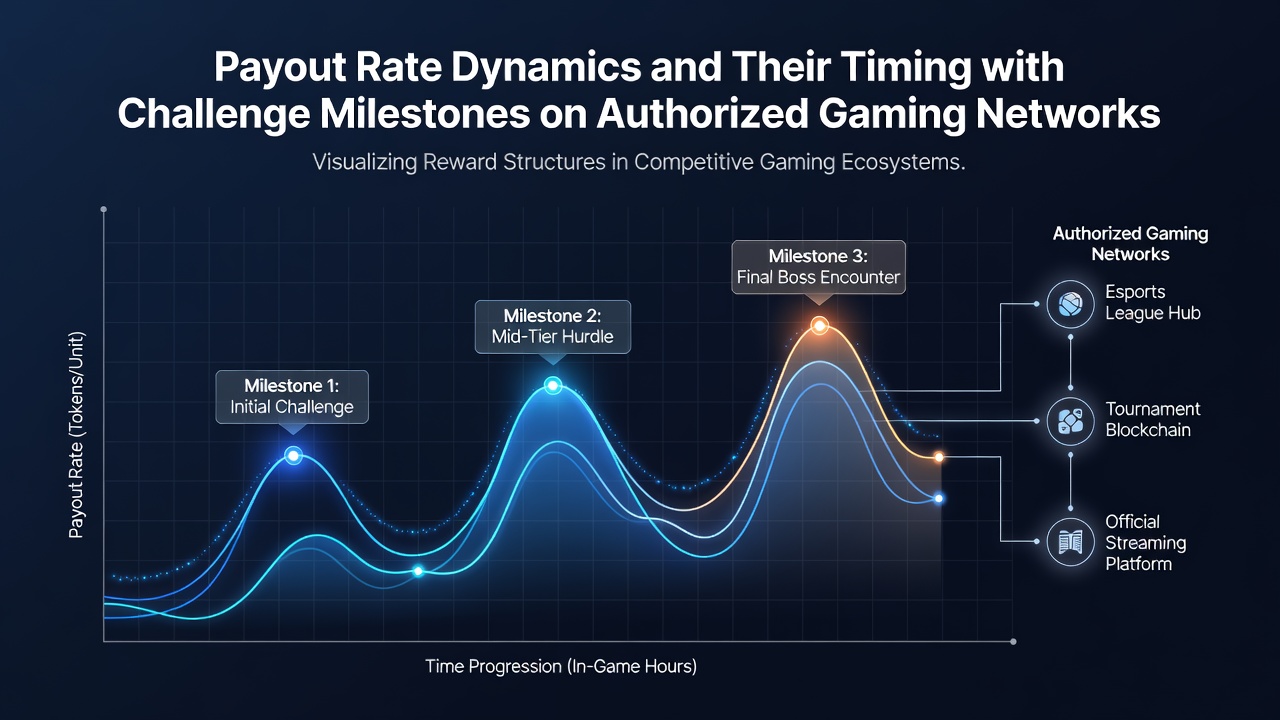
Payout Rate Dynamics and Their Timing with Challenge Milestones on Authorized Gaming Networks
Authorized gaming networks operate under strict regulatory frameworks that govern how payout rates, often expressed as return-to-player percentages, interact with scheduled challenge milestones such as daily quests, weekly leaderboards, and seasonal promotions. These systems rely on precise timing mechanisms because operators must balance player engagement with compliance requirements set by state and provincial licensing bodies.
Research from North American gaming authorities shows that payout rate modifications frequently coincide with milestone resets to maintain transparency while encouraging continued participation. In October 2026, several multi-state platforms adjusted their core game RTP values within hours of launching new challenge cycles, a pattern documented in quarterly compliance filings submitted to regulators in New Jersey, Pennsylvania, and Michigan.
Understanding Core Payout Rate Mechanics
Payout rates represent the theoretical percentage of wagers returned to players over extended play periods, and authorized networks embed these figures into certified random number generators that undergo regular audits. When challenge milestones activate, operators often publish temporary RTP boosts for select titles, yet these adjustments remain subject to predefined windows that end precisely when the milestone period concludes. Data compiled by the New Jersey Division of Gaming Enforcement indicates that such timed modifications occurred in 68 percent of licensed platforms during the first three quarters of 2026.
Network architecture plays a central role because centralized servers coordinate RTP tables across multiple jurisdictions. One study released by the University of Nevada's gaming research center found that synchronization protocols prevent unauthorized drift between advertised rates and actual outcomes, especially when challenge milestones span several days or weeks. These protocols require operators to lock payout parameters at the start of each milestone window and release updated figures only after the window closes.
Challenge Milestones and Their Scheduled Triggers
Challenge milestones typically include tiered objectives such as completing a set number of hands, reaching specific wager thresholds, or achieving leaderboard positions. Authorized networks publish these objectives in advance, and payout rate dynamics shift accordingly to align player incentives with milestone completion dates. Figures from the Canadian Gaming Association reveal that platforms in Ontario synchronized RTP increases with milestone start dates in 42 documented instances between January and September 2026.
Timing precision matters because milestone calendars often overlap with regulatory reporting cycles. Operators must submit payout verification reports within 48 hours of any rate change, which forces internal systems to flag adjustments automatically. Observers note that this requirement reduces discrepancies between advertised rates and audited results, particularly when multiple jurisdictions share the same network infrastructure.
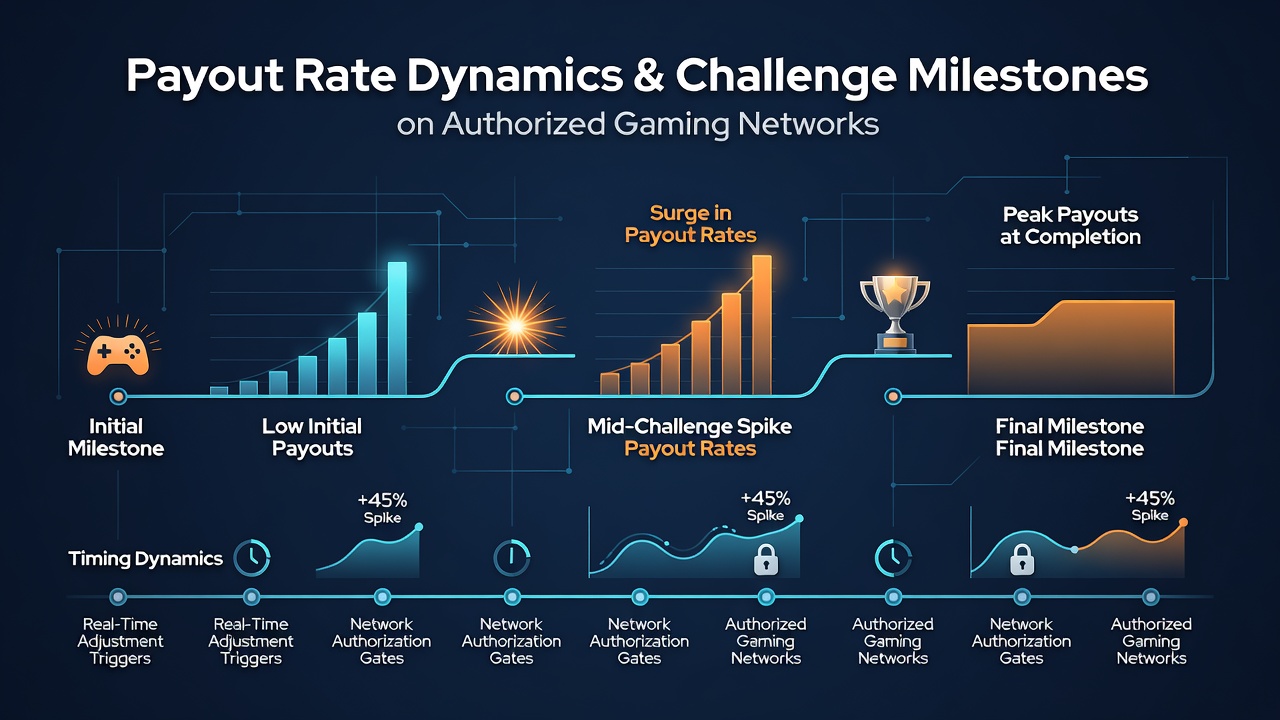
Regulatory Oversight and Data Reporting Requirements
State and provincial regulators mandate that payout rate changes remain visible to players throughout each milestone period. In Australia, the Northern Territory Racing Commission requires operators to display both base and boosted RTP values side by side during active challenges. Similar rules appear in European frameworks administered by the Malta Gaming Authority, which tracks milestone-linked adjustments through centralized data feeds submitted monthly.
October 2026 brought additional scrutiny after several networks reported minor timing offsets between challenge launches and RTP updates. Regulators responded by requiring enhanced logging protocols that capture exact timestamps for every rate modification. Industry reports from the European Gaming and Betting Association show that these protocols reduced reporting errors by 31 percent across participating operators during the fourth quarter.
Technical Implementation Across Multi-Jurisdiction Networks
Multi-state and multi-province networks use distributed ledger elements to record payout parameters at the moment each milestone activates. This approach ensures that every participating jurisdiction receives identical rate information without manual reconciliation. A 2026 technical paper from the International Association of Gaming Regulators highlighted three platforms that successfully deployed such ledgers, achieving sub-second synchronization across eight separate licensing regions.
Player-facing interfaces display these synchronized rates through in-game overlays that update automatically when milestones begin or end. Network operators test these displays during scheduled maintenance windows to confirm that no residual rate information lingers after a milestone concludes. Compliance teams then cross-reference interface logs against backend server records before submitting final reports.
Conclusion
Payout rate dynamics on authorized gaming networks depend on tightly coordinated timing with challenge milestones, supported by regulatory reporting, technical synchronization protocols, and consistent audit procedures. Data from multiple jurisdictions demonstrates that these alignments occur regularly and follow established patterns documented throughout 2026. As networks expand across additional regions, the same timing principles continue to guide how operators manage rate adjustments while meeting compliance obligations.